
Beyond Clicks & Conversions: How Empathy in Wellness Marketing Builds Trust
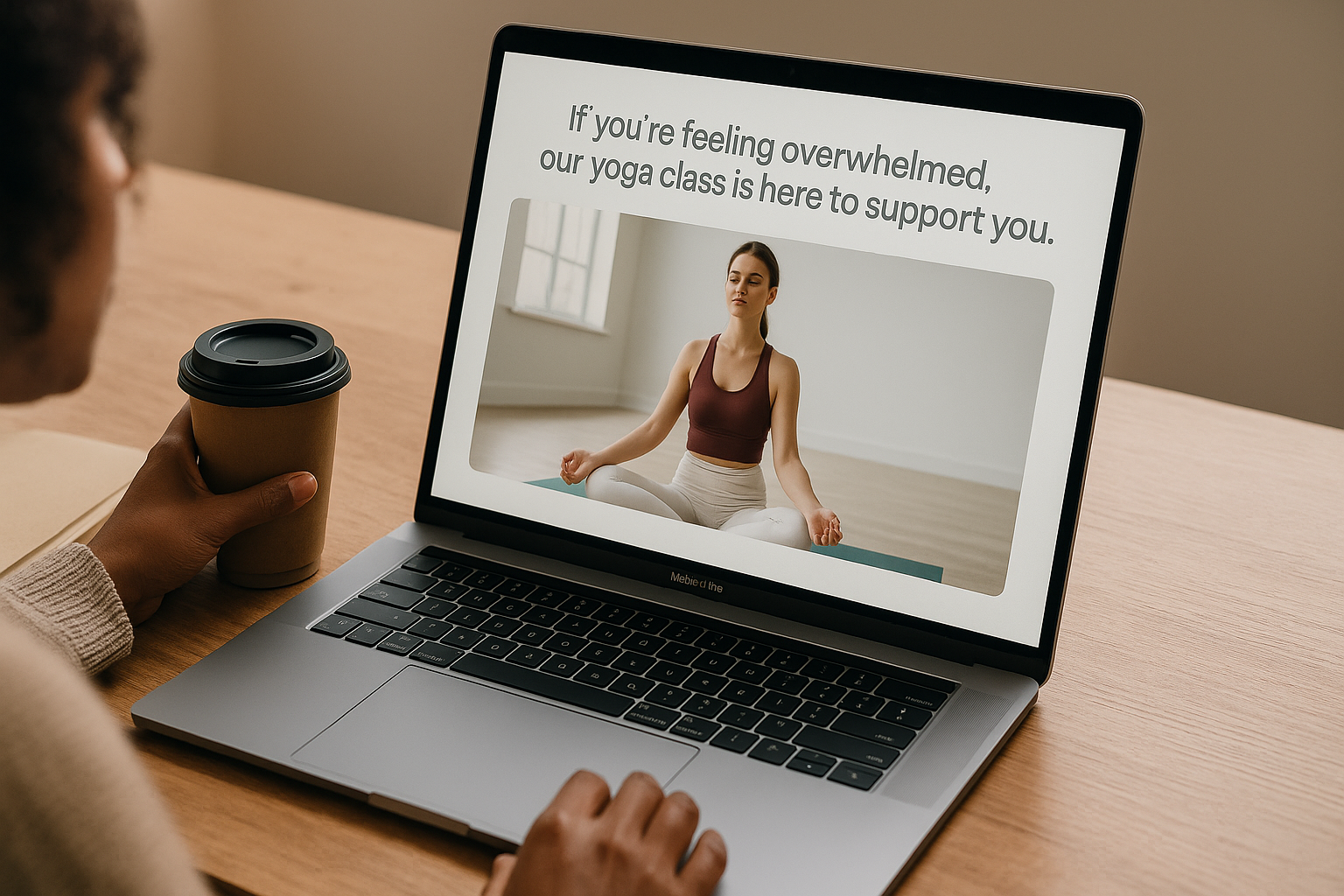
What if I told you that nearly 9 out of 10 purchases aren’t made because of logic—but because of emotion?
According to a 2023 study by Greenbook, a striking 86% of consumer purchase decisions are driven by emotional needs, such as security, belonging, and personal fulfillment.
In the wellness space, where every offer touches on the intensely personal—anxiety, burnout, shame around weight, or the longing for calm—that emotional currency isn’t optional. It’s essential.
Yet most wellness brands optimize for clicks. Few master empathy in wellness marketing—the real driver of trust, retention, and word-of-mouth.
This post explains why empathy in wellness marketing consistently outperforms pushy tactics—and how to apply it through trust-based marketing, human-first copywriting, and informed consumer psychology. (If you’re new here, you may also like my related guide on virality.)
We’ll also explore:
• Why empathy, not hard sell, wins in wellness marketing,
• The psychology behind why people choose based on emotion,
• Real-world examples of brands that embody empathetic marketing,
• And practical, human-first ways to make empathy your brand’s strongest strategy.
What is Empathy in Wellness Marketing?
Empathy in wellness marketing is the practice of understanding a customer’s emotions, context, and health goals and reflecting that understanding in your messaging, offers, and service design. Done well, it replaces generic claims with patient- or client-centered language, reduces anxiety, and builds trust that leads to stronger engagement and long-term retention.
Need help applying this? Explore our wellness content marketing services
Empathy vs. Sympathy: Why the Difference Matters
At first glance, empathy and sympathy might look similar-both express care. But in marketing, the difference is massive.
• Sympathy says: “That sounds tough.”
• Empathy says: “I know how hard this feels — here’s something small that can help.”
Consider a burnout coach. Instead of posting, “Sorry you’re stressed,” she writes: “I know what it’s like to stare at your inbox at 10 p.m., too tired to keep going but too wired to stop. Here are 2 rituals that helped me step away.”
This shift matters. Readers don’t just see a brand handing out advice. They feel seen. And when people feel seen, they lean in.
That’s empathy marketing in action—meeting people where they are with language that validates, not judges.
Mini-story :
A wellness blogger had built her brand around diet tips and fitness hacks, but something wasn’t clicking. Her posts sounded more like warnings than encouragement.
One caption read: “We know how awful it is to hate your body.” While true for many, the phrasing came across as pitying and even shaming. Engagement lagged.
She decided to experiment with an empathetic rewrite. Instead of speaking at her audience, she spoke with them: “If you’ve stood in front of the mirror wishing you felt better in your skin, you’re not alone. Here’s a kinder approach that worked for me.”
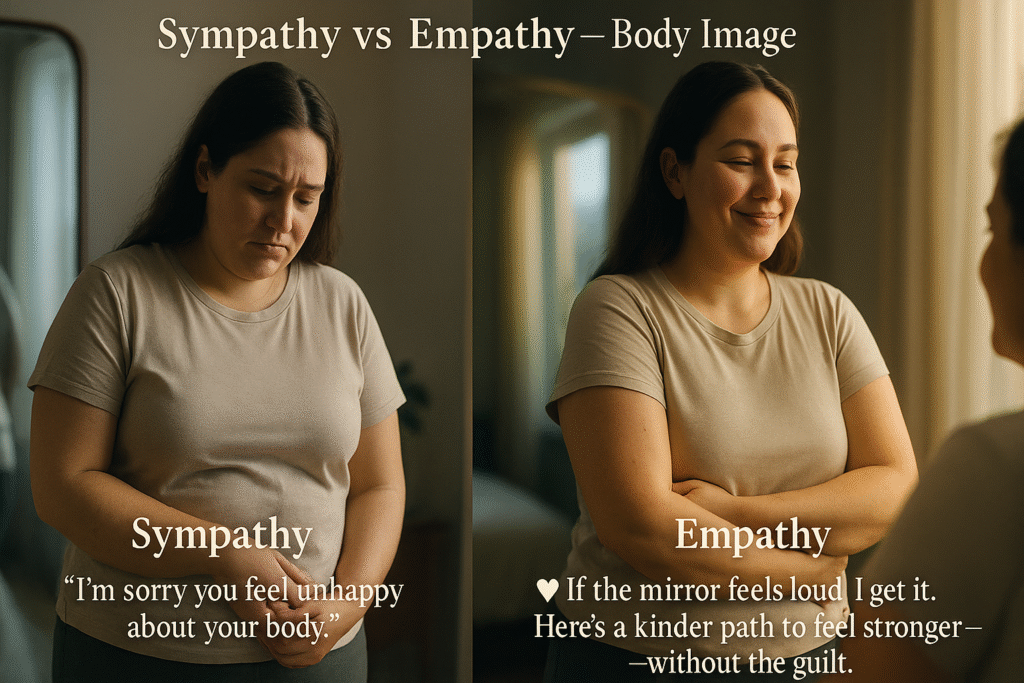
The difference was striking. Followers began commenting things like “This is exactly how I feel” and “Thank you for saying this in such a kind way.” Within two weeks, her engagement rate had doubled.
Beyond likes, she noticed longer comments, more shares, and even direct messages from women saying they finally felt understood instead of judged.
Empathy turned her content from a one-way lecture into a two-way conversation — and that conversation helped build trust.
That’s the heart of wellness brand messaging.
The Psychology of Empathy in Marketing
We like to think our choices are rational, but most are emotional.
Psychology tells us people decide with emotion, then justify with logic.
Neuroscience goes further: our mirror neurons make us “feel” others’ experiences. That’s why a story about panic attacks can spark real empathy even if you’ve never had one.
Research backs this up: Gallup found that about 70% of buying decisions are driven by emotional factors, while only 30% are rational.
A 2019 Edelman Trust Barometer report found that 81% of consumers said “I must be able to trust the brand to do what is right” — highlighting trust as a critical factor in purchase decisions. And trust doesn’t come from discounts or data. It comes from connection.
Example:
A mindfulness app once promoted itself with the line: “50+ meditations included.”
On paper, it sounded impressive — a clear, logical feature. But in practice it didn’t land. Potential users scrolled past because numbers alone don’t address why someone might need meditation in the first place.
So the brand rephrased. Instead of leading with features, they led with empathy: “For anyone lying awake with racing thoughts — here’s 10 minutes of calm.”
That single line painted a picture. It acknowledged the 2 a.m. struggle of tossing and turning, the mental chatter that won’t shut off, the yearning for relief. Readers didn’t just see an app; they saw themselves in the story.
The result?
Engagement with the campaign improved dramatically, with more downloads coming from people who said the copy “spoke to them.” The brand discovered that when you describe the feeling your audience is in, instead of the features you’re offering, you’re not just selling a tool — you’re offering hope.
That’s empathy in action.
It’s classic emotional marketing rooted in consumer psychology.
4 Ways to Practice Empathy in Wellness Marketing
1) Empathetic Onboarding
First impressions matter — especially in wellness.
By the time someone signs up for your email list or program, they’re often carrying years of frustration, guilt, or even shame.
If your very first message piles on pressure, you risk losing them before they even begin.
Take the example of a weight-loss coach.
• Generic onboarding email:
“Welcome! Here’s your 30-day plan. Stick to it and don’t miss a day.”
On the surface, it’s clear and structured. But for someone who has already tried and “failed” multiple diets, it feels like yet another demand they might not live up to. Instead of inspiring, it discourages.
• Empathetic onboarding email:
“If you’ve tried every diet and felt like a failure, you’re not alone. Here, we focus on progress, not perfection. You’ll get one small step to try this week — and I’ll be right here to support you.”
This version immediately validates the reader’s feelings. It acknowledges the shame without amplifying it. And it replaces rigid rules with permission to go at their own pace.
The difference is night and day.
The empathetic version doesn’t just welcome someone into a program — it welcomes them into a relationship built on trust.
2) Social Media Captions that Validate
Social media is full of “perfect” wellness routines: flawless yoga poses, green smoothies lined up in a row, and influencers who never seem to miss a workout.
For someone struggling with anxiety, burnout, or motivation, this perfection can feel alienating.
That’s why validating captions matters.
• Generic caption:
“Meditation is easy. Just sit still for 10 minutes.”
It sounds simple, but it risks shaming anyone who has tried and failed, or who struggles with restlessness.
• Empathetic caption:
“Some days, meditation feels impossible. That’s normal. Even one deep breath counts.”
This acknowledges the difficulty and offers permission to try less. It removes the pressure and reframes progress as accessible.
Takeaway: Use empathetic, human-first copywriting in captions to create space where people feel safe to be imperfect. This approach lifts pressure and invites participation.
3) Empathy in Content Formats
Sometimes, it’s not just what you say — it’s how you say it. Content formats themselves can convey empathy or feel cold.
• Generic blog post:
A 2,000-word article on “Symptoms of Burnout” written in medical jargon.
Informative? Yes.
But for someone who is exhausted and overwhelmed, it feels like another research paper.
• Empathetic carousel:
A burnout coach creates a visual post titled “5 Signs Your Body Is Begging for Rest.” Each slide has one symptom (fatigue, brain fog, irritability) paired with a gentle suggestion: “Try a 5-minute stretch” or “Drink water before your next meeting.”
The content becomes more than informative. It’s validating.
It says: “You’re not broken. Your body is talking to you — and here’s how to listen.”
One therapist who adopted this approach during Mental Health Awareness Month saw her post become her most saved of the year. Clients told her, “It felt like you were talking directly to me.”
Takeaway: Empathetic formats are a part of wellness brand messaging – they simplify, humanize, and make heavy topics digestible.
4) Empathy in Sales Copy
Sales is where many wellness brands lose empathy. In the drive to convert, they resort to pressure tactics or fear-based hooks. But empathy in sales copy can sell more effectively—because it builds trust.
• Generic sales copy:
“Fix your insomnia now with our proven 7-day program!”
• Empathetic sales copy:
“If you’ve tried melatonin, white noise, and still find yourself staring at the ceiling at 2 a.m., I get it. I’ve been there too. That’s why I created a gentler approach — one that finally helped me sleep.”
A sleep consultant who rewrote her landing page with this tone saw a 42% increase in conversions. Readers said they felt understood instead of sold to.
This is empathetic persuasion—emotional marketing without manipulation.
Case Studies: Empathy in Action
Mindfulness App
When a global news cycle brought waves of uncertainty and collective stress, one mindfulness app recognized that its usual marketing — “Try our 10-minute guided meditations” — wasn’t enough. People weren’t just looking for tools. They were craving comfort.
Instead of pushing features, the app leaned into empathy. They launched a free series of guided sessions under the title: “For when the world feels heavy.”
The messaging was simple but powerful. It didn’t minimize the anxiety people were feeling. It acknowledged it. The brand positioned itself not as a product to purchase, but as a companion in a difficult moment.
The impact was immediate: downloads spiked by 28% within a week, and social media lit up with users sharing the sessions with comments like “This is exactly what I needed today.” and “Thank you for showing up for us.”
App reviews reflected the same sentiment, praising the brand for “being there when we needed it most.
Empathetic positioning turned a product into a companion.
This campaign proved that empathy-driven marketing doesn’t just make people feel better — it builds loyalty. By validating what people were going through, the app turned a stressful cultural moment into an opportunity to connect more deeply with its audience.
Nutritionist
For years, this nutritionist marketed her services with before-and-after photos. On paper, it made sense: clear proof of results.
But something was off.
Potential clients scrolled past or even unfollowed. Some even messaged her saying the content felt “triggering” or “shaming.”
So, she tried a different approach — empathy. Instead of focusing on appearances, she shifted to stories of how her clients felt.
One of her most impactful posts read:
“Maria stopped skipping meals and finally had the energy to play with her kids again.”
It wasn’t about pounds lost. It was about the quality of life gained.
The reaction was immediate.
Comments flooded in: “This is the kind of change I want,” and “Finally, someone who gets it — it’s not just about the scale.”
Within three months, her inquiries doubled. And even better: the clients she signed on were more engaged and stayed longer because they felt supported, not judged.
Story-driven, human-first copywriting attracts the right people.
By reframing her marketing through an empathetic lens, she didn’t just get more clients. She got the right clients — the ones who connected with her mission on a deeper level.
Burnout Coach
This burnout coach had a thriving corporate career — until it nearly broke her. Years of long hours and constant pressure led to exhaustion so severe that one day she collapsed at her desk. Recovery took months.
When she later built her coaching practice, she realized that sharing that personal story might be the most powerful way to connect with potential clients. But it was a vulnerable move — exposing her lowest point to strangers online.
She leaped anyway.
In a blog post and Instagram carousel, she wrote candidly: “I used to believe pushing harder was the only way forward. Then my body forced me to stop. Here’s how I rebuilt piece by piece — and how you can too.”
The response was overwhelming. Comments like “This is my story too” and “I’ve been afraid to admit how bad it’s gotten” poured in. Engagement skyrocketed. And more importantly, new coaching clients reached out specifically saying they trusted her because she had lived what they were going through.
That one story later evolved into a signature workshop — From Burnout to Balance — which became her most profitable workshop.
Vulnerability, used with care, fuelled trust-based marketing and turned into her strongest business asset.
Pitfalls of Misusing Empathy
Empathy can transform your marketing — but only if it’s authentic.
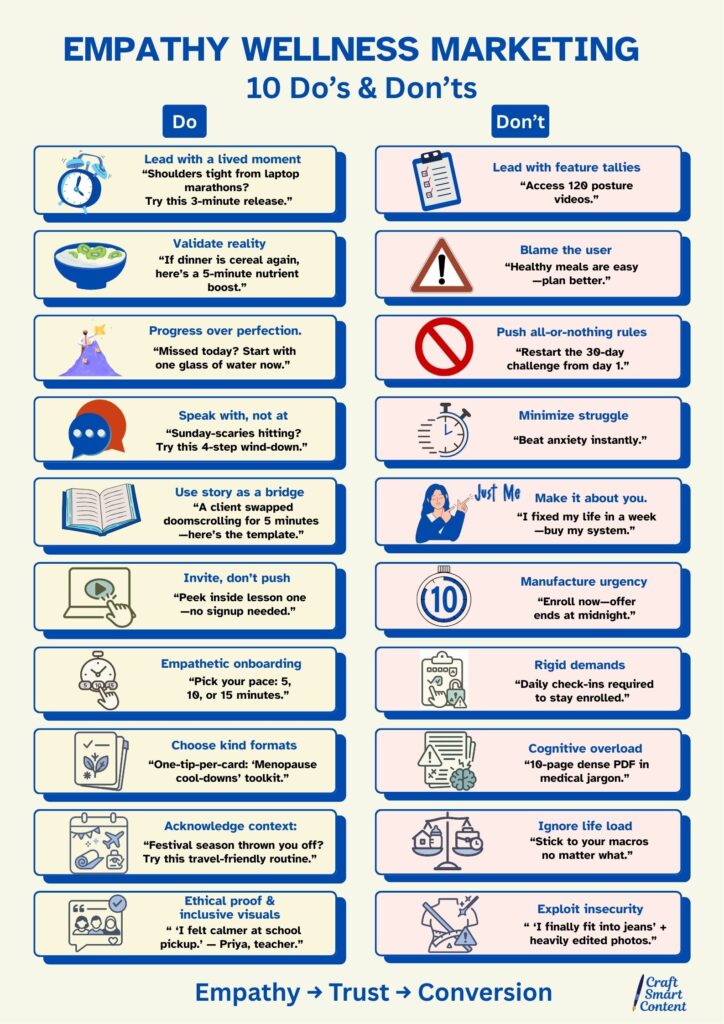
When misused, it can backfire, leaving audiences feeling manipulated rather than supported. Here are three common traps to avoid:
Fake empathy:
Many brands churn out empty “We care” posts during crises without offering meaningful support. Audiences are quick to spot when words don’t align with actions. A wellness brand that posts “We care about your mental health” while aggressively pushing sales will erode trust rather than build it.
Over-sharing:
Vulnerability builds connection, but there’s a line. When the story becomes all about you — your struggles, your transformation — without relating it back to your audience, it shifts from empathy to self-promotion. Remember: you’re the guide, not the hero.
Fear in disguise:
Some brands wrap shame-based marketing in the language of empathy. For example: “We know you hate your body — fix it with this detox.” That’s not empathy. That’s exploitation. It reinforces insecurity instead of providing support.
Real-world example:
After the holidays, one detox brand ran an ad that read:
“Feel disgusting? Try our cleanse.”
Instead of inspiring action, it triggered backlash and even negative press.
Another brand in the same niche reframed its campaign empathetically:
“Struggling with sluggish energy after the holidays?
Here are 3 simple foods to bring your body back into balance.”
The second ad didn’t shame — it validated. It generated shares, conversation, and brand goodwill.
Conclusion: Empathy as a Business Advantage
In wellness marketing, empathy isn’t fluff. It’s not about sounding “nice” or sprinkling in softer words. Empathy is a strategy. It’s the difference between content that gets scrolled past and content that sparks trust, loyalty, and action.
When you weave empathy into your messaging, you’re speaking directly to the real-life struggles of your audience:
- The 2 a.m. anxiety that keeps them awake.
- The burnout that leaves them numb at work.
- The frustration of failed diets that chip away at confidence.
- The joy of small, hard-won progress that deserves to be celebrated.
It’s about replacing pressure with permission, shame with support, and “sales talk” with human connection.
Mini-recap:
• People act on emotion, then justify with logic.
• Empathy is the bridge that creates trust — the foundation of every conversion.
• Every touchpoint — from a quick Instagram post to a full sales page — is a chance to show your audience you truly see them.
Mini-story to close:
A wellness retreat center once ran ads that said,
“Luxury wellness escape — book now.”
The response? Crickets. Few sign-ups, despite beautiful visuals.
When they shifted their message to empathy — “If you’re running on empty and craving rest, this retreat was made for you” — everything changed.
Within three weeks, they sold out. The offer hadn’t changed. The tone had.
Action Step:
Take one piece of your content this week—maybe a post about stress, sleep, or burnout. Rewrite it through an empathetic lens.
Instead of commanding, acknowledge.
Instead of shaming, support.
Share it, then watch closely.
You’ll likely see the difference not just in likes, but in comments, shares, and DMs that start with, “This is exactly what I needed.”
Because in the end, facts inform. Empathy converts. And more importantly, empathy heals.
FAQs: Empathy in Wellness Marketing
1. What is empathy in marketing?
Empathy in marketing means seeing the world from your audience’s perspective and shaping messages, offers, and experiences around what they feel and need—so content feels relevant, respectful, and helpful.
2. What does empathy mean in health?
In the context of health, empathy is understanding a person’s symptoms, fears, constraints, and goals, then responding with clarity and reassurance. It reduces anxiety and improves adherence and outcomes.
3. What does empathize mean in marketing?
To empathize is to research, listen, and mirror back the language your audience uses, replacing generic claims with specific, real-life problems and practical next steps.
4. What is empathy in customer centricity?
It’s the engine of customer-centric brands: decisions start with the customer’s context (access, literacy, budget, culture) and end with experiences that remove friction and build trust.
5. Is empathy a soft skill or a strategy?
Both—but it works best as a strategy. Teach the soft skill, then systemize it: regular customer interviews, a shared “customer language” bank, an inclusive style guide, and a checklist to remove friction. Measure it with simple KPIs such as CSAT(Customer Satisfaction Score), activation, and retention, so empathy shows up consistently across channels.
Want help weaving empathy into your content strategy?
Let’s build your next story-driven campaign together.
👉 Connect with Me: Fill the Contact Form or Mail at: hello@craftsmartcontent.com
Share:
Pingback: Viral Wellness Posts: 5 Proven Triggers + Examples – Craft Smart Content